Our website uses cookies. By using our website, you consent to our use of cookies in accordance with our Cookies Policy.



-
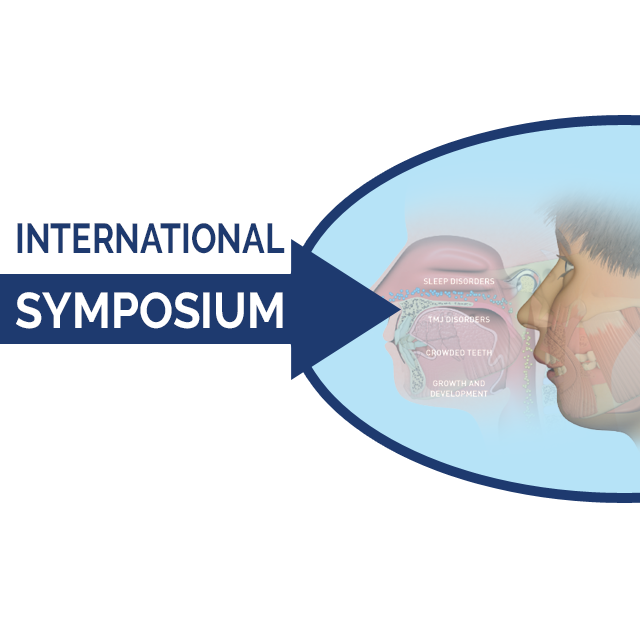 5-6.06
INTERNATIONAL SYMPOSIUM OF MYOFUNCTIONAL THERAPY
-
 12-13.06
LIONS 2026 – Module II
-
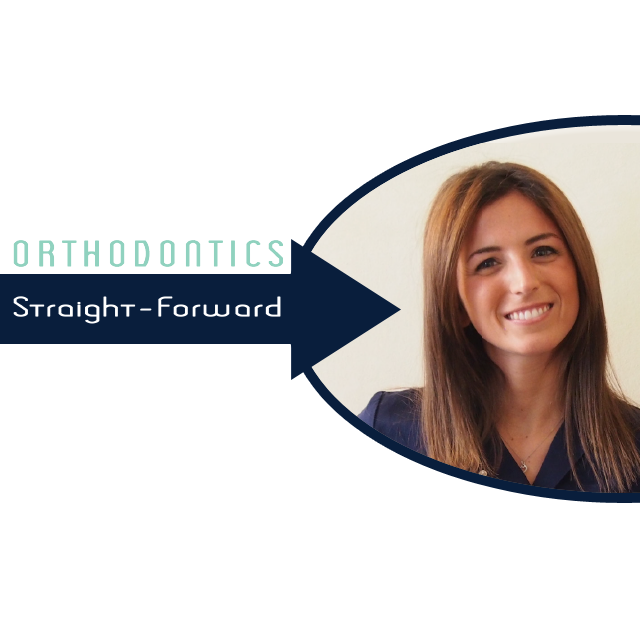 19-20.06
ORTODONTICS STRAIGHT-FORWARD
-
 3-5.07
Mirabella Orthodontic Program – Module IV
-
 3-5.09
Mirabella Orthodontic Program – Module V
-
 11-13.09
SIMPLE – Module I
-
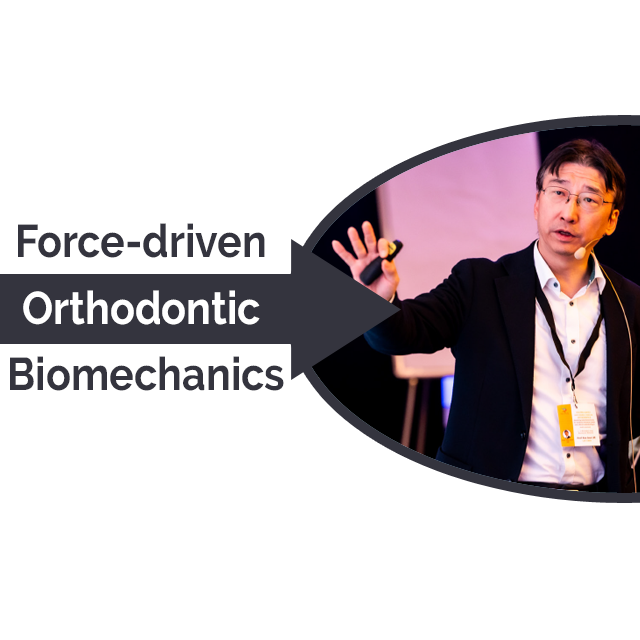 18-19.09
FORCE-DRIVEN ORTHODONTIC BIOMECHANICS
-
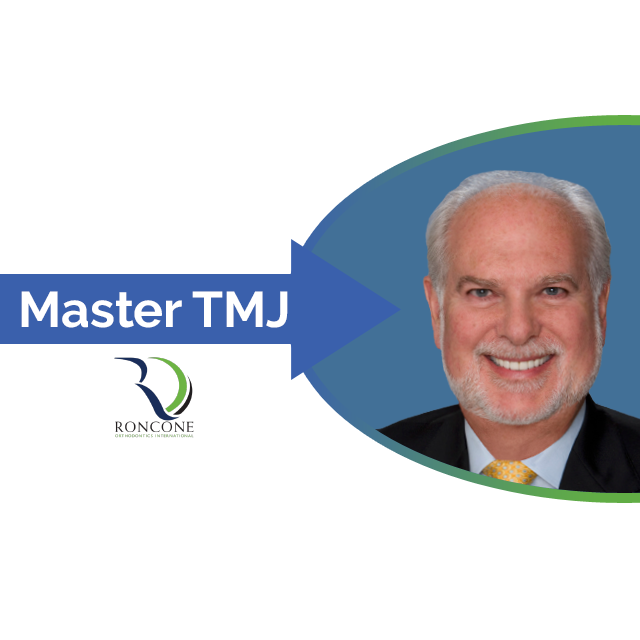 1-3.10
MASTER TMJ
-
 24-25.10
LIONS 2026 – Module III
-
 20-22.11
SIMPLE – Module II
-
 27-28.11
LIONS 2026 – Module III
-
 11-12.12
BIOMECHANICS PERFECTION
-
 20-21.02
LIONS 2026 – Module I
-
 12-14.03
SIMPLE – Module III
-
 2-4.07
SIMPLE – Module IV
×
Login Form
×
Registration
Profile Informations
Login Datas
or login
Details
BIOMECHANICS PERFECTION: FROM ROOT TO TOTAL ARCH MOVEMENT with Prof. Kee-Joon LEE
December 11-12, Frankfurt (Germany) - Hotel The Westin Grand Frankfurt
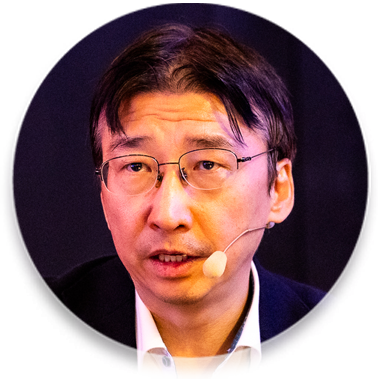
Prof. Kee-Joon LEE
Prof. Kee-Joon LEE
• President of WIOA• Professor, Department of Orthodontics, Yonsei University, Korea
• Visiting scholar, Dept of Biochemistry, University of Pennsylvania (2002~2004)
• Adjunct professor, Department of Orthodontics, University of Pennsylvania(2010~2011, 2016~2019), Temple University(2010~2011)
• Visiting Scholar, the Children’s Hospital of Philadelphia (2010~2011)
• The Inventor of MARPE skeletal anchorage concept in 2009
COURSE OUTLINE
Orthodontists analyze the irregularity of dentition, space deficiency and denture alignment pattern as well as the skeletal pattern in order to prescribe proper force system represented by force/moment and their combination. However in reality majority of the orthodontists are using single continuous arch wire from the beginning to the end of treatment.
Orthodontics brackets and archwires are basic tools mediating force systems for tooth movement. It is well known that an archwire inserted between adjacent teeth would create various geometries leading to combinations of vertical forces and moments. While indirect bonding of the brackets is proposed for precise alignment, an ‘ideal’ setup model and following indirect bonding procedure do not provide the key information on the force system they would produce. Reduced predictability of the so–called ‘idealized’ setup and indirect bonding is deeply associated with the nature of the shape-driven appliance. Hence understanding the geometry is crucial to anticipate and interpret unwanted tooth movement.
In this presentation a guideline for preliminary segmental movement for minor tooth movement will be proposed from a clinical perspective. Moreover, some of the remedies to overcome the inherent biomechanical limitation of conventional brackets will be suggested in the following aspects.
1. Understanding the bracket geometries
2. Single tooth movement for impacted tooth
3. Reciprocal symmetric or asymmetric molar correction using precision lingual arch
4. Arbitrary root movement for effective space closure
5. Incisor torque control for effective finishing
6. Force-driven single wire technique for transverse/vertical correction
PROGRAM
Day 1
9:00 -10:30 - Goal-oriented treatment planning midline-based diagnosis
• Face-driven goal-oriented treatment planning (VTO)• Sequence of treatment: segment or continous
Contemporary biomechanics for trouble-free leveling & alignment
• Concept of force & moment, center of resistance• Static equilibrium / equivalent force system
• Bracket geometry & clinical application for minimal flaring
10:30 - 11:00 - Coffee break
11:00 - 12:30 - Center of resistance-based planning for molar control: Antero-Posterior control
• Molar control using MAPS/MAUS• 3D/4D control of impacted tooth – when and how?
12:30 - 13:30 - Lunch break
13:30 - 15:00 - Center of resistance-based planning for molar control: Transverse controll
• Static equilibrium & unilateral/bilateral controlHANDS-ON/Demonstration: Precision lingual arch
15:00 - 15:30 - Coffee break
15:30 - 17:00 - Strategies for complicated cases: non-prosthetic treatment
• Translation & root movement for molars/MARS• Reconstruction of compromised cases for non-prosthetic treatment
HANDS-ON/Demonstration: Force-driven MARS
Day 2
9:00 -10:30 - Goal-oriented treatment planning – total arch movement
• Heavy or light force? Why?• Why single wire? Center-of-resistance perspective
• Conversion between extraction & nonextraction via OP rotation
10:30 - 11:00 - Coffee break
11:00 - 12:30 - Advanced biomechanics for total arch movement: Class II
• Understanding the dynamics in continuous arch sliding mechanics• Incisor control for non-surgical correction of Class II div 2
12:30 - 13:30 - Lunch break
13:30 - 15:00 - Biomechanics for total arch movement: Hyperdivergent face
• Total arch distalization: why and how• Total arch intrusion: why and how
HANDS-ON:
• Torque wire for total arch movement• Selective general torque wire for Class II/III
15:00 - 15:30 - Coffee break
15:30 - 17:00 - Non-surgical treatment for Class II/III/Asymmetry
• Transverse correction: MARPE or force-driven single wire technique• Non-surgical treatment of asymmetry